
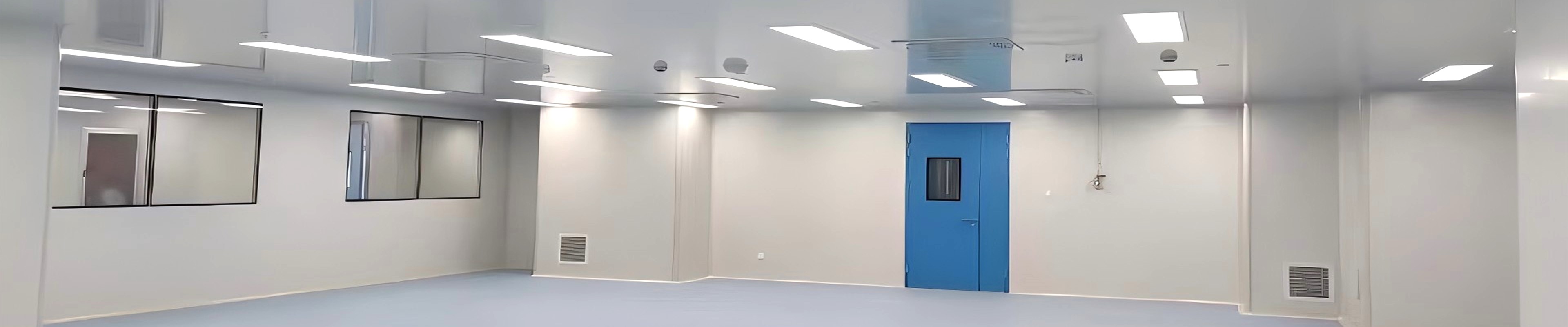
A pharmaceutical manufacturer installs H14 HEPA filters throughout a Grade A aseptic filling line. The filter efficiency reads 99.995% on the test certificate. The installation looks professional. Yet six months later, a routine particle count shows the cleanroom falling out of specification — not dramatically, but enough to trigger an investigation.
The cause is not filter efficiency. The filter media is performing exactly as rated. The problem is bypass leakage: unfiltered air slipping past the filter frame seal and entering the cleanroom without ever passing through the HEPA media. This is the failure mode that gel seal technology is specifically designed to prevent — and it is far more common than most cleanroom operators realise.
SCT's H14 Gel Seal HEPA Filter uses a liquid-gel sealing interface to support tight installation where controlled airflow matters. This article explains why the sealing technology is as important as the filter media itself — and how to specify the right seal type for your environment.
1. The Bypass Problem: Why a H14 Filter Can Still Leak
HEPA filter efficiency is measured under ideal laboratory conditions — uniform airflow, a perfectly sealed test duct, no gaps. In a real cleanroom installation, the filter sits inside a frame or housing, and that frame has a boundary: the interface between the filter and the mounting system.
With a conventional rubber-gasket seal, that interface is a compression joint. The rubber gasket is compressed against the filter frame by the mounting hardware, creating a physical barrier. In theory, this works. In practice, several factors degrade the seal over time and temperature cycles:
• Compression set. Rubber gaskets lose elasticity after repeated compression cycles. Over months of HVAC thermal cycling, the gasket no longer rebounds fully, leaving microscopic gaps at the frame interface.
• Uneven compression. If the filter is not perfectly seated in the frame, pressure concentrates at certain points and relaxes at others — creating a bypass path where the gasket does not make full contact.
• Age and chemical attack. Standard rubber compounds degrade when exposed to VHP, cleaning agents, or elevated temperatures. A gasket that was compliant at installation may become brittle within months.
• Filter loading. As the HEPA media captures particles and resistance rises, the differential pressure across the filter increases. That pressure differential acts on the frame seal, gradually forcing the gasket open at the weakest point.
The consequence is bypass: air that bypasses the filter media entirely, carrying particles straight into the cleanroom. A filter certified at 99.995% efficiency becomes, in practice, only as effective as its seal allows — and a failed seal can degrade effective efficiency to 95% or lower.
2. How Gel Seal Technology Works: The Liquid Interface Principle
Gel seal is a fundamentally different sealing approach. Instead of compressing a solid rubber gasket against a frame, a gel seal filter uses a self-contained trough of silicone gel running around the perimeter of the filter. During installation, a knife-edge or channel on the housing presses into this gel, and the gel flows to fill every microscopic irregularity in the metal surface.
The key material property is silicone gel's combination of softness and stability: it is soft enough to flow into surface imperfections measured in microns, yet chemically stable enough to maintain that seal through VHP exposure, temperature cycling, and years of differential pressure loading. The gel is also self-healing — if the installation is disturbed and re-seated, the gel re-conforms to the new position automatically.
The result is a seal that achieves two things a rubber gasket cannot: complete surface contact across the entire frame perimeter, and long-term resilience against the conditions that cause rubber gaskets to fail. This is why gel seal has become the standard for H13/H14 installations in GMP-regulated pharmaceutical environments and for HEPA filters in ISO 5 and cleaner cleanrooms.
3. Gel Seal vs Gasket: A Direct Comparison
The table below summarises the practical differences between a conventional rubber-gasket HEPA filter and a gel seal HEPA filter in a cleanroom installation.
| Criteria | Rubber Gasket HEPA | Gel Seal HEPA |
| Sealing mechanism | Compression joint — requires even, sustained pressure | Flowable gel — fills every surface irregularity |
| Bypass risk | Present and grows over time (compression set, age) | Near-zero: gel conforms to surface geometry |
| VHP / chemical resistance | Poor: rubber degrades with repeated exposure | Excellent: silicone gel is VHP-stable |
| Self-healing after disturbance | No: compressed gasket does not re-form | Yes: gel re-conforms after re-seating |
| Long-term integrity | Degrades with temperature cycling and filter loading | Maintained through thermal cycling and pressure differential |
| Standard for | General HVAC; non-critical applications | ISO 5+ cleanrooms; GMP Grade A/B pharmaceutical |
For any cleanroom where the classification matters — pharmaceutical Grade A/B, ISO 5 and above — the extra cost of a gel seal filter is not a luxury. It is the difference between a validated filter and a filter that is validated only in name.
4. H14 Filtration Grade: What 99.995% Actually Means
The H14 classification is defined by the EN 1822 standard (EN 1822:2019 in its current revision). H14 corresponds to a Most Penetrating Particle Size (MPPS) efficiency of at least 99.995% at 0.1–0.3 μm — the particle size range where HEPA filter media is actually least efficient.
This is an important distinction. A filter rated at "99.99%" by a less rigorous method may test at a larger particle size (e.g., 0.3 μm or above) where glass-fibre media performs better. EN 1822 H14 requires testing at the MPPS, which is the worst case — not a comfortable particle size. SCT H14 Gel Seal HEPA Filters are classified per EN 1822, with scan-test and classification certificates supplied with every unit.
H14 efficiency translates directly into practical cleanroom performance. For a 1,000 m³/h air supply at H14 filtration, the maximum unfiltered particle carry-over is 50 mL per hour — compared to 500 mL per hour with a single-stage medium filter. In a Grade A or ISO 5 environment, that difference determines whether the room meets its particle-count target.
5. Applications: Where Gel Seal H14 Filters Are Non-Negotiable
• Pharmaceutical aseptic filling (EU GMP Grade A/B). The most demanding application. Grade A requires unidirectional airflow at ISO 5 throughout the filling zone, with H14 terminal filtration at the ceiling. A failed seal at a ceiling HEPA box is not a gradual degradation — it is an immediate contamination risk during every open-container manipulation. Gel seal is the standard for this reason.
• Laboratory animal facilities and BSL-3/4 environments.Containment depends on negative pressurisation and unidirectional airflow. Any bypass leakage at a HEPA filter can compromise both containment direction and the biological safety of adjacent spaces.
• Hospital sterile compounding (ISO 5 / Grade A). USP <797> and EU GMP Annex 1 both require HEPA filtration with verified integrity. Gel seal supports the installation verification and re-verification requirements that audit protocols expect.
• Semiconductor manufacturing (ISO 3–5). Sub-micron particle defects on wafers and flat-panel displays are caused by particles smaller than 0.3 μm. A gel seal H14 filter — not merely a rated H14 filter — is essential to achieving and sustaining ISO Class 3–5 cleanliness.
• Medical-device manufacturing (ISO 13485). Cleanroom environments for surgical instrument and implant assembly require documented filtration integrity. Gel seal installation supports the documented bypass-free performance that quality systems must demonstrate.
For environments with moderate cleanliness requirements — ISO 7–8, general manufacturing — a standard rubber-gasket H13 filter is often sufficient. The gel seal H14 is specifically engineered for the applications listed above, where the risk of bypass is not acceptable.
6. Installation, Testing, and Ongoing Integrity
A gel seal filter is only as good as its installation. Even the best seal cannot compensate for a filter that is incorrectly seated or a housing that has been damaged. The installation and verification sequence for a gel seal HEPA filter follows these steps:
• Housing preparation. Inspect the filter housing or HEPA box for any damage, deformation, or debris at the knife-edge or gel-channel interface. Any surface irregularity here will affect the seal.
• Filter seating. Lower the filter into the housing carefully. The gel trough should sit flush against the knife-edge without any pre-compression. If the filter requires force to seat, check for housing damage or incorrect filter dimensions.
• Filter integrity scan test (DOP/PAO). With the diffuser removed, introduce DOP or PAO aerosol upstream of the filter. Scan the downstream face with a handheld particle counter. A passing result shows no leak paths at the seal. This test is required per ISO 14644-3 and is the definitive check for bypass-free installation.
• Differential pressure baseline. Record the clean resistance immediately after installation. This becomes the reference for all future filter-change decisions. A sudden drop in resistance after installation indicates a seal problem; a gradual rise is normal filter loading.
• Re-verification after disturbance. If the filter is disturbed for any reason — maintenance, filter change in an adjacent unit, HVAC adjustment — the DOP scan must be repeated. Gel seal re-seats automatically, but re-verification confirms the seal before the room is returned to service.
7. Frequently Asked Questions About Gel Seal HEPA Filters
Q: What is a gel seal HEPA filter?
A: A gel seal HEPA filter uses a self-contained trough of silicone gel around its perimeter instead of a rubber compression gasket. During installation, the housing knife-edge presses into the gel, which flows to fill every surface irregularity and creates a near-zero-bypass seal. The gel is self-healing if the filter is disturbed and re-seated.
Q: What is the difference between gel seal and a rubber-gasket HEPA filter?
A: A rubber-gasket filter relies on sustained compression to seal the frame interface — a mechanism that degrades over time through compression set, temperature cycling, and VHP/chemical exposure. A gel seal filter eliminates this degradation pathway: the flowable gel conforms to the surface geometry regardless of micro-irregularities, and it maintains its integrity through conditions that destroy rubber.
Q: Why does bypass leakage matter if the filter efficiency is 99.995%?
A: Filter efficiency is measured under ideal, sealed test conditions. In a real installation, any air that bypasses the filter media — even a small fraction — carries particles directly into the cleanroom without filtration. A filter with a failed seal can deliver effective efficiency of 95% or less, even while its media remains at 99.995%. The seal is as important as the media.
Q: What H14 filter grade means for cleanroom classification?
A: H14, per EN 1822:2019, requires ≥99.995% efficiency at the Most Penetrating Particle Size (MPPS, typically 0.1–0.3 μm). This meets the terminal filtration requirement for ISO 5 environments (Grade A/B pharmaceutical), ISO 4–5 semiconductor cleanrooms, and other applications where sub-0.3 μm particle control is critical.
Q: How do I verify a gel seal filter is installed correctly?
A: A DOP or PAO aerosol challenge test is the definitive verification. With the diffuser removed or a probe inlet fitted, introduce aerosol upstream and scan the downstream face with a particle counter. Any reading above the scan-test limit indicates a leak — at the media, the seal, or the housing. This test is required per ISO 14644-3 and EU GMP Annex 1 after every new installation and every filter disturbance.
8. Why SCT Cleanroom for Gel Seal H14 Filters?
• EN 1822-certified H14 performance.Every SCT H14 Gel Seal filter is classified and scan-tested per EN 1822:2019, with classification certificates supplied as standard. You receive the test data that your quality system requires, not just a datasheet claim.
• VHP-compatible silicone gel formulation.SCT gel seal filters use a silicone gel compound validated for repeated VHP cycle exposure — the standard decontamination method for pharmaceutical Grade A/B environments. The gel maintains its flow and sealing properties through hundreds of VHP cycles.
• Custom dimensions and frame materials.Send your required dimensions and application details, and SCT will configure the filter to your existing housing or HEPA box specification. Aluminium extruded frame is standard; SS304/SS316 frames are available for chemically aggressive environments.
The Seal Determines Whether the Filter Performs
A gel seal H14 HEPA filter is a precision component in two senses: the filter media delivers 99.995% efficiency, and the gel seal ensures that efficiency is actually delivered in your cleanroom — not just on a test certificate. For pharmaceutical, semiconductor, and hospital applications where the cleanroom classification is non-negotiable, the sealing technology is not a detail. It is the integrity of the system.
SCT provides H14 Gel Seal filters in custom dimensions to match your existing housing, with full EN 1822 classification documentation and technical support for installation and integrity testing. Send your dimensions and application requirements for a custom solution.
Contact SCT Cleanroom Today
Website: www.sctcleanroom.com
Email: admin@sctcleanroom.com
WhatsApp: +86 15306200553
Post time: Sep-09-2026