
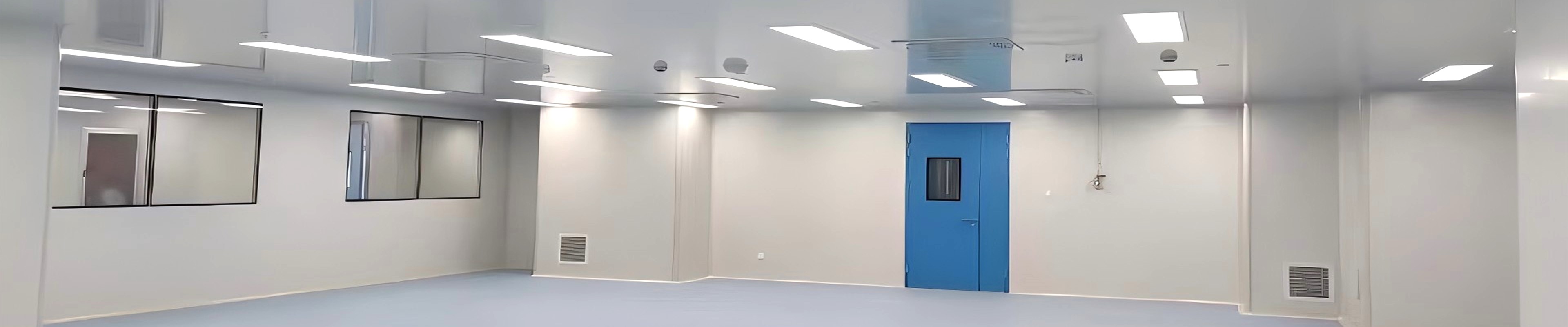
Industrial dust collectors are specialized air filtration systems designed to capture and contain airborne particulate at or near the point of generation during manufacturing, machining, and material handling processes. In cleanroom-adjacent environments — including precision manufacturing, pharmaceutical production, and electronics assembly — controlling dust at source is essential to maintaining air cleanliness and protecting product quality.
Unlike general HVAC filtration, which treats recirculated room air, a dust collector intercepts particles before they disperse into the surrounding environment. This reduces the load on the cleanroom's main air filtration system, extends HEPA filter service life, and lowers overall fan energy consumption.
SCT Cleanroom's dust collector product line addresses three core operational requirements: cartridge-style filtration for compact high-efficiency particle capture, pulse-cleaning configuration for filter maintenance without production shutdown, and portable arrangements for facilities with changing or multi-point dust collection needs.
1. Why Point-of-Generation Dust Control Matters
Cleanrooms are designed to maintain extremely low particulate levels — ISO Class 5, for example, requires just 3,520 particles/m³ at ≥0.5 µm. Achieving this requires a combination of HEPA filtration, positive pressure differential, and controlled airflow, all of which impose significant energy and maintenance costs.
When dust is generated inside or near a cleanroom and not captured at source, it travels through the production area to the cleanroom air-handling system. This accelerates filter loading, increases fan energy consumption, and raises the risk of particulate excursions that could compromise product quality or trigger regulatory non-conformance findings.
Every kilogram of dust captured at source is a kilogram that does not reach the cleanroom filter. For multi-shift operations or high-dust-load processes such as powder handling, granule processing, or machined metal work, the return on investment in dedicated dust collection is typically measured in months rather than years.
1.1 Industries Requiring Point-of-Generation Dust Control
| Industry | Typical Dust-Generating Process | Primary Driver for Control |
| Pharmaceutical | API handling, tablet compression, coating | GMP compliance, cross-contamination prevention |
| Electronics / Semiconductor | SMT assembly, wafer grinding, laser machining | ESD sensitivity, defect rate reduction |
| Medical Device | Surgical instrument manufacturing, implant polishing | ISO 13485, surface finish quality |
| Food & Beverage | Powder mixing, filling, packaging | HACCP, allergen control |
| Precision Machining | CNC grinding, drilling, deburring | Worker safety (silica/metal dust), tool life |
2. Cartridge-Style Filtration: Compact Particle Collection at High Efficiency
Cartridge filters are cylindrical, pleated filter elements — typically constructed from synthetic media or nano-fiber membrane — that provide a large filtration surface area within a compact housing. The pleated geometry increases media area by a factor of 8 to 15 compared to a flat sheet of equivalent footprint, enabling higher dust-holding capacity and longer service intervals in a smaller physical volume.
2.1 How Cartridge Filtration Works
Contaminated air is drawn into the collector housing and passed through the cartridge element. Particles are captured on the media surface (cake formation) and within the depth of the structure. The pleated design supports both surface and depth loading, maintaining consistent airflow resistance over a longer period compared to bag filters.
2.2 Key Cartridge Filter Selection Parameters
| Parameter | Specification Guideline | Significance for Cleanroom Operations |
| Filtration Efficiency | ≥99.9% for particles ≥0.5 µm (HEPA-grade media) | Determines suitability for cleanroom-adjacent zones |
| Media Material | Synthetic or nano-fiber preferred over cellulose | Better moisture and temperature resistance |
| Dust-Holding Capacity | ≥150 g/m² at design airflow | Longer intervals between replacements |
| Operating Temperature | Up to 80 °C standard; high-temp variants available | Match to process conditions (e.g., hot powders) |
2.3 Advantages Over Bag Filters
• Compact footprint: cartridge collectors require significantly less floor space than equivalent-capacity bag houses
• Higher filtration efficiency: pleated media achieves HEPA-level performance (99.99% at 0.3 µm) in a single stage
• Lower initial pressure drop: clean media resistance is typically 40–60 Pa at rated airflow, reducing fan energy consumption
• Reduced media consumption: longer service life means fewer filter replacements and less waste
3. Pulse-Cleaning Configuration: Filter Maintenance Without Shutdown
Pulse-jet cleaning (reverse-pulse or compressed-air pulse cleaning) uses short, high-pressure bursts of compressed air directed through the filter cartridge from the clean side to the dirty side. The pressure shock dislodges the accumulated dust cake from the media surface, allowing it to fall into the collection hopper. This restores a significant portion of the filter's original pressure drop without removing or replacing the cartridge.
3.1 The Pulse-Cleaning Cycle
Step 1 — Accumulation: Dust-laden air passes through the cartridge; particles accumulate on the media surface, gradually increasing pressure drop.
Step 2 — Pulse Trigger: When pressure drop reaches the pre-set threshold (typically 1,000–1,500 Pa), the pulse controller activates a solenoid valve.
Step 3 — Compressed Air Release: A 0.1–0.3 second burst of compressed air (3–5 bar) expands through a venturi or nozzle mounted above the cartridge tops.
Step 4 — Dust Release: The pressure wave flexes the cartridge media, cracking the dust cake and propelling it downward into the collection hopper. Filter resistance returns to near-original levels.
Step 5 — Continuous Operation: The collector resumes filtration without interruption to production. Hopper dust is discharged via a rotary valve or bin at the unit base.
3.2 Benefits for Multi-Shift and Continuous Manufacturing
In facilities operating 24/7 — common in pharmaceutical, semiconductor, and food processing sectors — any maintenance requiring dust collector shutdown directly impacts production throughput. Pulse-cleaning eliminates this tradeoff by enabling filter maintenance during normal operation.
• Zero production downtime for routine filter cleaning
• Predictable maintenance scheduling based on differential pressure monitoring rather than reactive replacement
• Reduced personnel exposure to process dust (no open-filter handling during operation)
• Consistent capture efficiency: the filter is restored to near-clean performance after each pulse cycle
3.3 Pulse-Cleaning Parameters
| Parameter | Typical Value | Design Rationale |
| Pulse Duration | 100–300 ms per cartridge | Short enough to avoid excessive dust re-entrainment |
| Compressed Air Pressure | 3–5 bar (44–73 psi) | Sufficient to flex media and release cake |
| Differential Pressure Setpoint | 1,000–1,500 Pa (typical) | Trigger point before excessive energy penalty |
| Pulse Frequency | One cartridge at a time; sequential firing | Prevents pressure surge that could disturb hopper dust |
| Dust Discharge | Rotary valve or double-flap discharge | Maintains sealed hopper under negative pressure |
4. Portable Arrangements: Flexible Dust Collection Across Multiple Work Points
Fixed dust collection systems are effective when the dust source location is permanent. However, modern manufacturing increasingly involves mobile processes: equipment repositioned between production runs, multi-machine cells where a single collector services multiple stations, and contract facilities where workstation assignments change frequently.
A portable (movable) dust collector integrates the fan, filter housing, and collection hopper into a single, wheeled frame that can be relocated without ducting modifications. Connection to the dust source is made via flexible hose or quick-connect ducting, allowing reconnection at a new work point in minutes.
4.1 Portable Collector Design Specifications
| Design Factor | Recommended Specification | Operational Rationale |
| Mobility | Heavy-duty casters (2 locking minimum); unit weight ≤300 kg | Ensures safe manual repositioning without handling equipment |
| Hose Connection | Flexible rubber hose, 100–150 mm diameter, quick-clamp fittings | Rapid connection and disconnection at multiple work points |
| Sound Level | <75 dB(A) at 1 m from unit | Protects worker hearing in open bay manufacturing environments |
| Filtration Area | 8–15 m² per cartridge; minimum 1 cartridge per portable unit | Matches airflow of typical portable tool connections (1,000–2,000 m³/h) |
| Collection Bin | 30–60 L capacity; sealed bin with tamper-evident latch | Sufficient for shift-length operation; prevents dust release during transport |
| Power Supply | 380 V / 50 Hz three-phase or 220 V / 50 Hz single-phase | Standard industrial power compatibility |
4.2 Common Portable Dust Collector Applications
• CNC machining cells: relocating the collector between machines eliminates the cost of dedicated ducting for each tool
• Welding and grinding stations: portable units follow the work, capturing fumes at source
• Powder filling and transfer: mobile collectors positioned at the point of dust generation during bag dumping or container filling
• Maintenance and cleaning operations: portable units support ad-hoc dust capture during facility cleaning and equipment servicing
5. System Integration: Connecting the Dust Collector to Your Facility
5.1 Interlock with Production Equipment
Linking the dust collector to the start/stop cycle of the associated production machine ensures collection begins when the process starts and stops when it ends. This prevents unnecessary energy consumption, reduces filter media wear, and avoids negative pressure conditions in the ducting when no airflow is required.
5.2 Differential Pressure Monitoring and BMS Connectivity
Modern dust collectors equipped with differential pressure transducers can transmit real-time filter condition data to a Building Management System (BMS) or standalone data logger. This enables:
• Predictive maintenance alerts: scheduled replacement based on actual filter loading rather than calendar intervals
• Energy monitoring: tracking fan energy consumption as a function of filter loading (pressure drop)
• Compliance documentation: historical pressure drop records demonstrating maintenance compliance during regulatory audits
Standard communication protocols include 4–20 mA analog output, Modbus RTU, and optionally BACnet or Profinet for integration with modern BMS platforms.
5.3 Placement Guidelines
• Capture velocity: the hood or nozzle at the dust source must generate sufficient air velocity (typically 0.5–1.0 m/s) to capture particles before they disperse
• Duct run length: longer runs increase pressure loss and reduce effective capture flow; keep runs under 5 m where possible
• Collector placement: position at or below the elevation of the dust source; avoid placing above, where dust may settle in the ducting
• Multiple work points: use a manifold or selector valve to allow one collector to service up to 3–4 stations sequentially
6. Industry Applications and Configuration Selection
| Application | Recommended Configuration | Key Selection Rationale |
| Pharmaceutical tablet production | Cartridge + pulse-cleaning | GMP compliance; HEPA-level capture prevents cross-contamination |
| Electronics PCB grinding | Cartridge + portable | Captures abrasive and metallic dust at CNC stations |
| Food powder handling | Cartridge + sealed hopper | Allergen containment; stainless steel contact surfaces available |
| Medical implant polishing | Portable + HEPA post-filter | Captures metal particulate; HEPA protects cleanroom air quality |
| General manufacturing maintenance | Portable | Multi-purpose dust capture during cleaning and repair operations |
6.1 Specification Checklist
Before specifying a dust collector, confirm the following parameters:
□ Peak airflow requirement (m³/h) and operating pressure (Pa)
□ Dust load per shift (kg) and bulk density of collected material
□ Particle size distribution of the process dust (median, D90)
□ Process temperature and moisture content of the dust-laden air
□ Available power supply (voltage, phase, frequency)
□ Required filtration efficiency (standard or HEPA-grade)
□ Integration requirements (BMS, interlock, data logging)
□ Space constraints for portable unit placement
7. Maintenance Best Practices
| Interval | Action | Purpose |
| Daily | Check collection bin fill level; empty before reaching 80% capacity | Prevents dust carryover and hopper overflow |
| Weekly | Inspect pulse-cleaning system: check solenoid operation and compressed air pressure | Ensures pulse-cleaning is effective; prevents premature filter blinding |
| Monthly | Measure differential pressure across each cartridge; record in maintenance log | Enables predictive maintenance scheduling; demonstrates compliance |
| Quarterly | Inspect cartridge media for tears, channelling, or moisture damage; replace as needed | Maintains capture efficiency; prevents particle bypass |
| Annually | Full system inspection: fan motor, bearings, ducting integrity, BMS connectivity | Prevents catastrophic failure; extends equipment service life |
8. Why SCT Cleanroom for Industrial Dust Collection
SCT Cleanroom supplies dust collection equipment designed for manufacturing environments adjacent to or supporting cleanroom operations. Key differentiators include:
• Cartridge filtration efficiency rated at ≥99.9% for particles ≥0.5 µm, suitable for cleanroom-adjacent applications
• Built-in pulse-cleaning configuration as standard, eliminating the need for manual filter removal during production hours
• Portable configuration option for facilities with mobile production equipment or multi-station manufacturing cells
• Custom sizing and configuration service: SCT engineers review process parameters and facility layout to specify the correct collector model, cartridge media, and pulse-cleaning settings
• Global compliance documentation: material certifications, performance test reports, and FAT documentation available for regulatory submissions
Contact SCT Cleanroom to discuss your dust collection requirements. Provide details of the process (airflow, dust load, particle size, and application) and SCT's technical team will recommend a configured solution with a full specification and quotation.
Frequently Asked Questions
Q1: What is the difference between cartridge filtration and bag filtration in a dust collector?
Cartridge filters use pleated cylindrical elements that provide a larger filtration surface area in a smaller housing compared to cylindrical bag filters. This results in higher dust-holding capacity per unit volume, lower initial pressure drop, and the ability to achieve HEPA-level efficiency (99.99% at 0.3 µm) in a single filtration stage. Bag filters are typically used in higher-airflow, lower-efficiency applications where floor space is less constrained.
────────────────────────────────────────────────────────────────────────────────
Q2: How does pulse-cleaning extend filter service life without replacing the cartridge?
Pulse-jet cleaning uses short bursts of compressed air (3–5 bar, 100–300 ms) to dislodge the accumulated dust cake from the cartridge surface. This restores pressure drop to near-original levels without opening the housing or handling the filter media. The cartridge remains installed and operational throughout the cleaning cycle, which can be repeated hundreds of times before the media eventually requires replacement.
────────────────────────────────────────────────────────────────────────────────
Q3: Can a portable dust collector effectively serve a stationary production machine?
Yes. Portable dust collectors are commonly used to serve fixed production equipment when the cost of permanent ducting is not justified, or when the production schedule requires flexibility to reallocate the collector between machines. Capture efficiency is maintained if the capture hood is correctly sized and positioned, and hose run length is within the manufacturer's specification (typically 5 m or less).
────────────────────────────────────────────────────────────────────────────────
Q4: How often should the filter cartridge be replaced in a pulse-cleaning dust collector?
Replacement frequency depends on dust load, particle characteristics, and pulse-cleaning effectiveness. In typical manufacturing applications, cartridge service life ranges from 6 to 24 months. Monitoring the differential pressure across the filter — and replacing when it no longer returns to acceptable levels after pulse-cleaning — is the most reliable indicator. SCT recommends maintaining a differential pressure log as part of a preventive maintenance schedule.
────────────────────────────────────────────────────────────────────────────────
Q5: Is the dust collector suitable for pharmaceutical or food-processing environments?
SCT's dust collectors can be configured with materials suitable for pharmaceutical and food-processing applications, including stainless steel hoppers, FDA-compliant sealing, and HEPA-grade post-filtration. Specific suitability depends on process conditions (temperature, moisture, product contact) and applicable regulatory requirements. Contact SCT with your process details and applicable standards for a tailored configuration recommendation.
Contact SCT Cleanroom
Website: www.sctcleanroom.com
Email: admin@sctcleanroom.com
WhatsApp: +86 15306200553
Post time: Oct-08-2026