
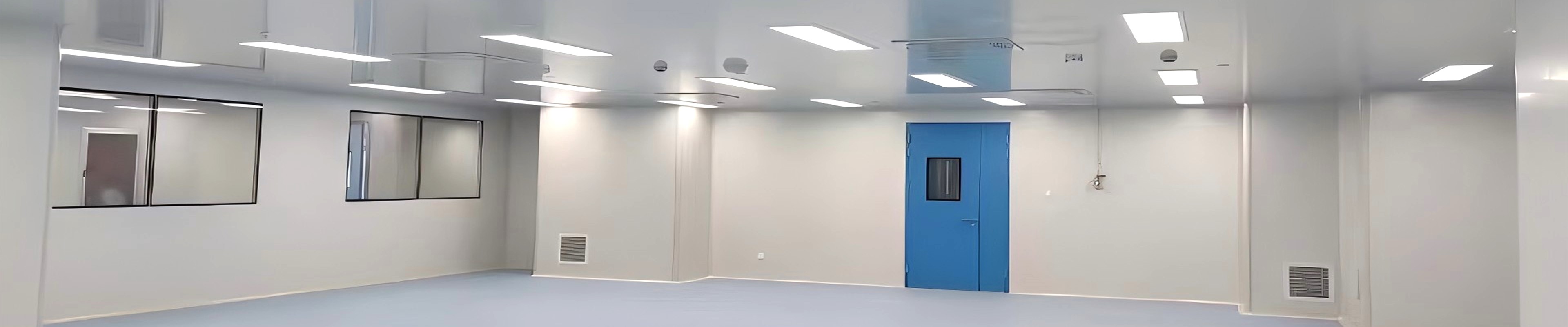
SCT Cleanroom has completed production and dispatch of one set of cleanroom pass boxes destined for a facility in Thailand. The shipment reinforces SCT's position as a cleanroom equipment manufacturer capable of delivering tailored material transfer solutions to markets across Southeast Asia — with full in-house manufacturing oversight from component inspection through to final assembly and shipping preparation.
In-House Manufacturing: Direct Oversight at Every Stage
Every pass box that leaves SCT's production facility passes through a structured, in-house manufacturing and quality process. By handling production and assembly internally, SCT's team maintains direct oversight of each stage:
• Component verification: all structural panels, door assemblies, interlock mechanisms, HEPA filter frames, and electrical components are checked against specification before entering assembly
• Assembly precision: the pass box body, hinge systems, door seals, UV germicidal lamp holders, and control modules are assembled by trained technicians following standardized work instructions
• Pre-delivery inspection: the finished unit undergoes a full function check — door interlock sequencing, UV lamp operation, fan performance, and overall dimensional compliance — before being cleared for shipment
This in-house model means that customers receive equipment that has been verified against their specific requirements — not pulled from a shelf and repackaged. The direct oversight chain also enables faster issue resolution during production, reducing lead times and minimizing the risk of non-conforming deliveries reaching the customer site.
Material Transfer in Cleanroom Operations: Why the Pass Box Matters
The pass box is one of the most frequently used interfaces in a cleanroom facility. It is the primary controlled passage for the transfer of materials, samples, instruments, and small equipment between areas of different cleanroom classification or between a cleanroom and an adjacent changing room or corridor.
A properly specified pass box does more than provide a physical opening. It can help:
• Maintains differential pressure integrity between adjacent zones by minimizing direct air exchange during door opening
• Prevents cross-contamination through UV germicidal irradiation or HEPA filtration of the transfer chamber air
• Enforces material transfer sequencing through mechanical or electronic interlock systems that prevent simultaneous door opening
• Provides a documented audit trail of transfer events where electronic logging is specified
For pharmaceutical, biotechnology, electronics, and medical device manufacturing facilities in Southeast Asia — a region seeing significant investment in new cleanroom construction — the reliability and specification compliance of the pass box directly affects operational efficiency and regulatory standing.
Tailored Solutions for Local Facility Requirements
SCT's approach to each pass box project begins with a technical review of the customer's facility layout, cleanroom classification, transfer frequency, and regulatory environment. This allows SCT to configure the pass box to the specific demands of the destination facility rather than supplying a standard model that may not fully address the application.
Configuration variables that SCT adapts to each project include:
| Configuration | SCT Options | Selection Rationale |
| Chamber Size | Standard 600×600×600 mm; custom dimensions available for oversized transfers | Match to material dimensions and transfer frequency |
| Door Interlock | Mechanical interlock (standard); electronic interlock with event logging (optional) | Regulatory requirement and audit trail needs |
| HEPA Filtration | H14 HEPA filter (99.99% at 0.3 µm) with pre-filter; or unfiltered chamber (changing room use) | Cleanroom classification of source and destination zones |
| UV Germicidal Lamp | Single-ended UV-C lamp (254 nm); timer-controlled; lamp life indicator | Surface decontamination of transferred materials |
| Surface Finish | Powder-coated steel (standard); 304L / 316L stainless steel (pharmaceutical grade) | Corrosion resistance and cleanroom compatibility |
| Control Interface | Local push-button panel; door status indicator LEDs; optional BMS feedback signal | Integration with facility control architecture |
Southeast Asian Cleanroom Market: Growth Drivers for Material Transfer Equipment
The Southeast Asian cleanroom equipment market is seeing sustained growth driven by several structural factors:
• Pharmaceutical manufacturing expansion: Thailand, Vietnam, and Malaysia are attracting increased investment in aseptic drug manufacturing facilities, driving demand for GMP-compliant cleanroom equipment including pass boxes
• Electronics and semiconductor investment: regional expansion of precision electronics manufacturing is generating demand for ISO Class 5–7 cleanroom environments where material transfer protocols are critical
• Medical device production localization: national policies in Thailand and Indonesia encouraging local manufacturing of medical devices are creating new cleanroom build-out projects
• Cold chain and biotechnology growth: the post-pandemic focus on vaccine and biologic manufacturing capacity has accelerated cleanroom construction across the region
SCT Cleanroom is positioned to serve this growing demand with equipment manufactured under quality-controlled in-house processes, shipped globally with full documentation packages that support regulatory submissions in the destination country.
The Delivery Process: From SCT's Workshop to the Thailand Facility
The journey from SCT's production facility to the customer's site in Thailand follows a structured preparation and logistics process:
Step 1 — Pre-shipment inspection: The completed pass box undergoes full function testing and is photographic-documented against the purchase order specification before packing.
Step 2 — Protective packaging: The unit is wrapped in moisture-resistant barrier material, secured to a wooden pallet, and crated to prevent transit damage during international shipping.
Step 3 — Documentation preparation: SCT prepares a shipping documentation package including the bill of materials, factory acceptance test (FAT) report, operation manuals, and certificates of conformance.
Step 4 — Logistics coordination: SCT coordinates international freight forwarding, including export customs clearance and inland transport to the destination facility.
Step 5 — Site arrival and installation support: Upon arrival, SCT's technical documentation supports the receiving inspection and installation process. Customer can contact SCT via WhatsApp for any technical queries.
Contact SCT Cleanroom
Website: www.sctcleanroom.com
Email: admin@sctcleanroom.com
WhatsApp: +86 15306200553
Post time: Oct-10-2026