
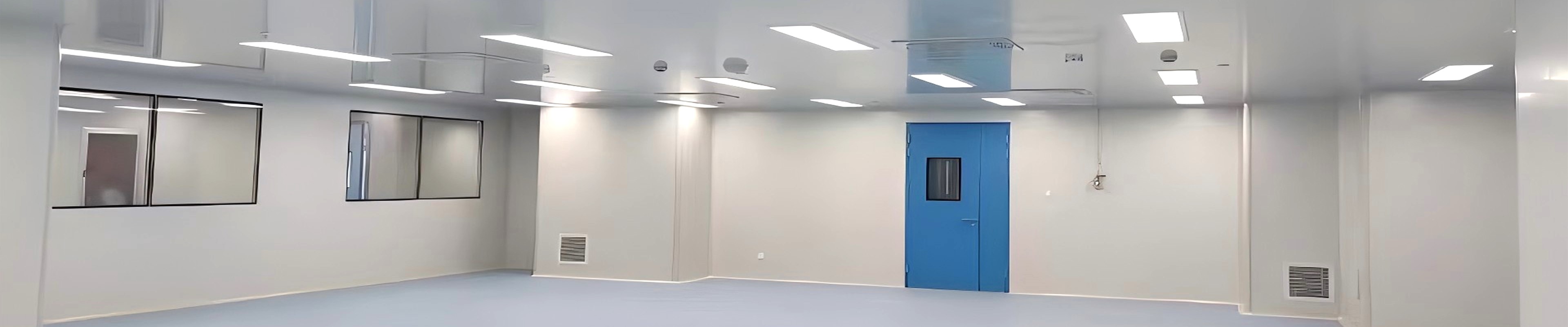
A successful cleanroom project starts with a coordinated system. The wall panels, doors, filtration, lighting, and airflow equipment are not independent purchases — they are the parts of a single controlled environment that must work together to hold the cleanliness class, the pressure differential, and the airflow pattern the facility requires.
SCT Cleanroom operates as both a cleanroom manufacturer and a turnkey solution provider, supporting projects from planning and production through installation and commissioning. This article explains what a turnkey approach delivers, what falls inside its scope, and why a single coordinated provider changes the outcome of a cleanroom project compared to assembling components from multiple vendors.
1. What "Turnkey" Means for a Cleanroom Project
In a turnkey cleanroom project, a single provider takes responsibility for the delivery of a working controlled environment — not just the supply of individual components. The scope extends across the full lifecycle:
• Planning and design: defining the cleanroom class, layout, airflow pattern, pressure cascade, and material flow
• Production: manufacturing the panels, doors, and equipment to the agreed specification
• Installation: assembling the modular system on site and mounting and sealing the components
• Commissioning: verifying airflow, pressure, filter integrity, and cleanliness against the design specification
The defining feature of turnkey delivery is that responsibility for the final performing system rests with one organisation. When the customer accepts a turnkey cleanroom, they accept a working environment — not a pile of parts that someone else must integrate.
2. The Scope of a Turnkey Cleanroom System
A practical controlled environment brings together several component groups, each of which must be specified and coordinated with the others:
| Component Group | What It Includes | Role in the System |
| Modular panels | Wall and ceiling panels forming the cleanroom envelope | The physical boundary and the mounting surface for everything else |
| Doors | Hinged and sliding doors with sealing and interlock systems | The highest-traffic elements; the primary pressure and contamination interface |
| Filtration | HEPA filter boxes and fan filter units | Terminal air filtration that delivers the required cleanliness class |
| Lighting | Cleanroom luminaires, fully enclosed and cleanable | Illumination for production and inspection without particle shedding |
| Airflow equipment | Air showers, pass boxes, and other airflow-related equipment | Personnel and material transfer without compromising the pressure differential |
In a turnkey project, these groups are not sourced and integrated separately. They are planned, produced, and installed as a coordinated set, so the interfaces between them — panel joints, door seals, filter housing seals, and equipment penetrations — are engineered rather than improvised on site.
3. Why a Coordinated System Beats Component Assembly
The difference between a coordinated turnkey system and a multi-vendor assembly is most visible at the interfaces and at the point of failure. Three specific differences matter most:
3.1 Engineered Interfaces
The performance-critical points of a cleanroom are the interfaces between components. In a turnkey project, these are designed into the specifications before fabrication — door openings are planned into the panel layout, filter housings are matched to the ceiling modules, and equipment penetrations are coordinated with the wall panels. In a multi-vendor approach, each interface is resolved on site by whoever happens to be installing it, and the quality varies accordingly.
3.2 Single Point of Responsibility
When panels, doors, filtration, and airflow equipment come from separate suppliers, responsibility for the final system performance is diffuse. Each vendor can demonstrate that their own component is correct while the system fails at an interface between them. A turnkey provider carries responsibility for the whole, so a performance problem has a single accountable party and a single path to resolution.
3.3 Faster Resolution
Because a turnkey provider manufactures its own components, specification changes, interface clarifications, and production questions are resolved within one organisation. This compresses the project timeline and removes the coordination overhead that a multi-vendor project carries at every stage.
4. The Project Lifecycle in Turnkey Delivery
| Stage | Key Activities | Why It Matters |
| Planning and design | Class, layout, airflow, pressure cascade, and flow are defined; component specifications are established | Fixes the performance envelope while corrections are cheapest |
| Production | Panels, doors, filtration, lighting, and equipment manufactured in-house | Factory-controlled tolerances deliver a consistent result |
| Installation | Modular system assembled; components mounted and sealed on site | Installation quality preserves the design intent |
| Commissioning | Airflow, pressure, filter integrity, and cleanliness verified | Confirms the system meets the specification before handover |
The lifecycle is not a sequence of independent stages. Each stage anticipates the next — design considers how the system will be installed and commissioned, production considers how the components will fit together, and installation considers how the finished system will be verified. This continuity is the practical benefit of a single turnkey provider.
5. What to Look for in a Turnkey Cleanroom Provider
Not every provider that calls its offer "turnkey" delivers the same thing. The following characteristics distinguish a genuine turnkey capability from a component supplier with an installation subcontract:
• In-house manufacturing: the provider manufactures its own panels, doors, and equipment rather than reselling other suppliers' products, which gives it direct control over quality and interfaces
• Full-scope responsibility: the provider accepts responsibility for the final performing system, not just for the supply of parts
• Design capability: the provider can translate the facility's requirements into a coordinated specification, rather than requiring the customer to supply a completed design
• Commissioning capability: the provider verifies that the installed system meets the specification, closing the loop from design to performance
6. Why SCT as a Turnkey Cleanroom Partner
SCT Cleanroom operates as a cleanroom manufacturer and turnkey solution provider, supporting projects from planning and production through installation and commissioning:
• In-house manufacturing of modular panels, doors, filtration, lighting, and airflow equipment
• Coordinated system design that engineers the interfaces before fabrication
• Single point of responsibility for the performing controlled environment
• Full lifecycle support from planning and design through installation and commissioning
• Documentation and verification support for regulatory and validation requirements
Contact SCT Cleanroom to discuss your cleanroom project. Provide the target cleanroom class, the facility layout, the airflow and pressure requirements, and the material and personnel flow, and SCT's team will support the project as a coordinated turnkey solution from planning through commissioning.
Frequently Asked Questions
Q1: What does a turnkey cleanroom project include?
A turnkey cleanroom project places responsibility for a working controlled environment with a single provider, covering planning and design, production of the panels, doors, and equipment, installation on site, and commissioning to verify airflow, pressure, filter integrity, and cleanliness. The customer accepts a performing system rather than a collection of components that must be integrated separately.
────────────────────────────────────────────────────────────────────────────────
Q2: What is the difference between a turnkey provider and a component supplier?
A component supplier provides individual parts — panels, doors, filters, or equipment — and the customer or a separate contractor must integrate them. A turnkey provider accepts responsibility for the final performing system, manufacturing its own components and coordinating the interfaces between them so that the finished cleanroom meets its specification as a whole. The distinction is most visible when a problem occurs: a turnkey provider has a single accountable path to resolution, while a multi-vendor project has diffuse responsibility.
────────────────────────────────────────────────────────────────────────────────
Q3: Why do engineered interfaces matter in a cleanroom?
The performance-critical points of a cleanroom are the interfaces between components — panel joints, door seals, filter housing seals, and equipment penetrations. When these are engineered into the specifications before fabrication, they produce a consistent, repeatable result. When they are resolved on site by whoever is installing them, the quality varies and the system is more likely to fail at exactly those points.
────────────────────────────────────────────────────────────────────────────────
Q4: What components fall within a turnkey cleanroom system?
A practical controlled environment brings together modular wall and ceiling panels, hinged and sliding doors with sealing and interlocks, HEPA filter boxes and fan filter units, cleanroom lighting, and airflow-related equipment such as air showers and pass boxes. In a turnkey project, these groups are planned, produced, and installed as a coordinated set.
────────────────────────────────────────────────────────────────────────────────
Q5: How does a turnkey provider reduce project risk?
A turnkey provider reduces risk through three mechanisms: engineered interfaces that are designed before fabrication, a single point of responsibility for the final system, and faster resolution because specification changes and production questions are handled within one organisation. These reduce the likelihood of interface failures and shorten the path to resolution when problems do occur.
Contact SCT Cleanroom
Website: www.sctcleanroom.com
Email: admin@sctcleanroom.com
WhatsApp: +86 15306200553
Post time: Nov-17-2026