
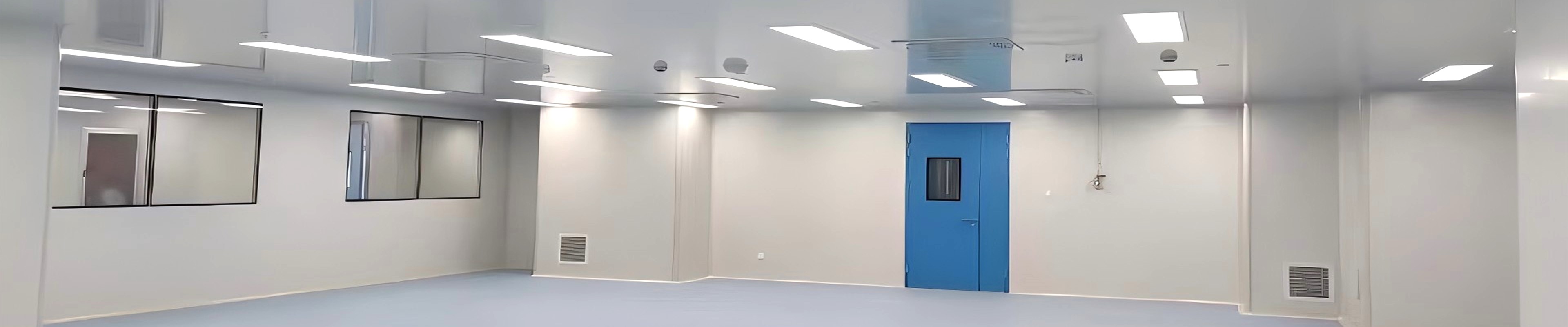
A cleanroom's walls, partitions and ceilings are its most visible surfaces — and the surface is only as good as the coating that protects it. The colour-coated steel skin on a cleanroom sandwich panel is what determines how long the panel lasts, how clean it stays, whether it controls static, and whether it survives the facility's disinfection regime.
Choose the wrong coating and the panel will yellow, delaminate, shed static or fail cleanroom validation — a rework cost far greater than the price difference between coatings. This guide explains the main cleanroom sandwich panel surface coating types, and how project, technical and procurement teams should choose among them.
1. First, Understand What a Cleanroom Sandwich Panel Is — and Why the Coating Matters
A clean room panel (also called a cleanroom panel or purification panel) is a composite panel with a thin metal skin on each face and a core — rock wool, paper honeycomb, aluminium honeycomb or polyurethane — bonded in between. It is the standard building block for the walls, partitions and ceilings of cleanrooms in electronics, pharmaceutical, food and hospital facilities.
The coating on the metal skin is not cosmetic. It decides four things:
• Lifespan. How resistant the surface is to corrosion and ageing — in practice, how many years the panel will serve before it needs replacing.
• Cleanliness. How easy the surface is to clean and whether it can carry an anti-bacterial function — which directly affects the achievable cleanliness class.
• Safety. Whether the panel dissipates static electricity, a make-or-break requirement in electronics and semiconductor rooms.
• Compatibility. Whether the coating withstands the facility's disinfection method — some fumigation agents destroy the wrong coating.
In one sentence: the wrong coating will yellow, peel, fail static control or fail cleanroom validation — and the cost of reworking a panel is far greater than the price difference between coatings.
2. Common Surface Coating Types
By base resin system there are five main coating families, plus functional coatings that can be "stacked" on top of them rather than used as a standalone topcoat.
| Type | Full Name / Characteristics | Reference Lifespan | Typical Use |
| PE | Polyester — the most common and least expensive; moderate weathering and chemical resistance | 7–10 years | General industrial clean zones (Class 10,000 / 100,000) |
| HDP | High-durability polyester — better weathering, colour retention and UV resistance than PE | 10–15 years | High-weathering areas, food, outdoor enclosure |
| SMP | Silicone-modified polyester — heat and abrasion resistant, but poor flexibility and prone to cracking; being phased out | — | A few special heat-resistant cases |
| PVDF | Fluorocarbon — best weathering, chemical, anti-stain and self-cleaning performance; longest life, highest cost | 20+ years | Pharmaceutical GMP, electronics, strong-disinfection environments |
| Film-laminated | PVC / PET film lamination — extremely flat, smooth, dense and easy to clean; can carry anti-static / anti-bacterial functions | Excellent | High-cleanliness (Class 100 / 1,000), pharma aseptic, electronics |
| Functional coating | Anti-static, anti-bacterial — stacked on the above families, not a standalone topcoat | Depends on substrate | Electronics / semiconductor, pharma, food, hospital |
The first four families are separate topcoats applied to the metal skin. The film-laminated board takes a different route — bonding a dense PVC or PET film to the surface for a flatter, smoother, easier-to-clean finish that can also be engineered for anti-static or anti-bacterial performance.
The coating sits on top of the panel's structural core. For how the core material affects insulation and fire performance — a decision made alongside the coating — see the guides to PU sandwich panels and rock wool sandwich panels.
3. How to Choose — Three Rules
Coating selection is not a catalogue decision; it follows from three questions about the facility. Working through them in order prevents the two most common mistakes: over-spending on a coating the room does not need, and under-specifying a coating the disinfection regime will destroy.
Rule 1 — By industry and cleanliness class
• Electronics / semiconductor / LCD panels. Need anti-static and high cleanliness → PVDF or anti-static film-laminated board.
• Pharmaceutical aseptic / GMP workshops. Need anti-bacterial, easy-clean and validation-ready → PVDF or anti-bacterial film-laminated board.
• Food & beverage. Need anti-bacterial and resistance to frequent wash-down → HDP or PVDF.
• General industrial clean zones (Class 10,000 / 100,000). PE or HDP is sufficient — and cheaper.
• Outdoor roofing / external enclosure. Weathering comes first → PVDF or HDP.
Rule 2 — By disinfection method (the easiest trap to fall into)
If the workshop uses VHP (vaporized hydrogen peroxide) fumigation, ozone, or strong oxidizers for room disinfection, ordinary PE — and some HDP — will yellow, chalk and lose gloss after only a few cycles. In these cases PVDF is mandatory, or the coating must be confirmed as VHP-resistant before specification.
This is the single most common rework trigger. Many projects specify PE "because it is only a Class 10,000 room", only to find the panels bloom after a few fumigation cycles. When the disinfection method is aggressive, the coating is the first thing to check — not the last.
Rule 3 — By budget and lifespan
• Short-term, general cleanliness, tight budget. PE or HDP is adequate and economical.
• Long-term operation, high cleanliness, high requirements. PVDF is worth it — on total cost of ownership it is the cheaper choice, because it avoids early replacement and revalidation.
For a broader look at how the panel fits into the whole envelope — including cleanroom wall panels and modular cleanroom construction — review SCT's full clean room product range.
4. Frequently Asked Questions About Cleanroom Panel Coatings
Q: What is a cleanroom sandwich panel?
A: A composite panel with a thin metal skin on each face and an insulating core (rock wool, paper honeycomb, aluminium honeycomb or polyurethane) bonded between them. It is the standard material for cleanroom walls, partitions and ceilings.
Q: How many surface coating types do cleanroom sandwich panels have?
A: There are five main topcoat families — PE (polyester), HDP (high-durability polyester), SMP (silicone-modified polyester), PVDF (fluorocarbon) and film-laminated board — plus anti-static and anti-bacterial functional coatings that are stacked on top of them.
Q: Which coating is best for a pharmaceutical GMP cleanroom?
A: PVDF or an anti-bacterial film-laminated board. Both are easy to clean, validation-friendly and resistant to the aggressive disinfection agents used in aseptic and GMP environments.
Q: Does VHP / hydrogen peroxide fumigation damage cleanroom panel coatings?
A: Yes, on the wrong coating. VHP, ozone and strong oxidizers will yellow, chalk and dull ordinary PE and some HDP coatings. For fumigated rooms, use PVDF or a coating confirmed as VHP-resistant.
Q: What is the difference between PE and PVDF coating?
A: PE is the least expensive and is fine for general industrial clean zones (7–10 years). PVDF is a fluorocarbon with the best weathering, chemical and self-cleaning performance and a 20-year-plus life — the choice for high-cleanliness and aggressive-disinfection environments.
Q: Do cleanroom panels need anti-static or anti-bacterial coatings?
A: Only where the process requires it. Anti-static coatings are essential for electronics and semiconductor rooms; anti-bacterial coatings matter in pharmaceutical, food and hospital environments. Both are functional add-ons, not a substitute for the right topcoat.
5. Why SCT Cleanroom for Your Cleanroom Panels?
SCT Cleanroom manufactures cleanroom sandwich panels and the enclosure systems around them, and has supplied clean air solutions to more than 200 clients across 50 countries since 2005. Three things distinguish the approach to coatings:
• Application-matched specification. SCT specifies the coating against the facility's actual industry, cleanliness class and disinfection regime — not against a generic catalogue default.
• Full core-and-skin range. PU, rock wool, paper honeycomb and aluminium honeycomb cores, paired with PE, HDP, PVDF and film-laminated coatings, including anti-static and anti-bacterial options.
• Validation-ready documentation. Materials are supplied with the documentation and traceability that cleanroom validation and GMP audits expect, so the coating decision holds up in review.
Choose the Coating Before the Panel
The cleanroom sandwich panel coating is a small part of the budget but a large part of the facility's lifetime performance. Getting it right means matching the coating to the industry, the cleanliness class and — most critically — the disinfection method the room will actually run. Get that wrong, and the cheapest coating becomes the most expensive mistake in the build.
SCT Cleanroom can help you specify the right coating and core for your cleanroom panels, with the anti-static, anti-bacterial and validation-ready options your process requires. Contact us to start a technical review of your project.
Contact SCT Cleanroom Today
Website: www.sctcleanroom.com
Email: admin@sctcleanroom.com
WhatsApp: +86 15306200553
Post time: Aug-27-2026